
Tag Archives: gpu

AI Swarms Need an Inference Platform, Not Just a Clever Prompt

I have been thinking about the phrase “AI swarm”. It sounds wonderfully futuristic: a collection of small artificial workers, each with a job to do, passing messages around until they reach an answer.

The reality is a little more practical—and much more interesting. A multi-agent system is a software design in which several LLM-powered agents collaborate on a task. Each agent normally has instructions, some state, and possibly tools. A “team” is the general arrangement of those agents under an orchestrator. A “swarm” usually implies something more peer-like: agents can hand work to one another and share a conversation rather than everything passing through one central controller.

That distinction matters, because a fixed sequence of model calls is really an agentic workflow. It can still be useful, but it is not automatically a swarm just because there are three prompts involved.

Continue reading AI Swarms Need an Inference Platform, Not Just a Clever Prompt →
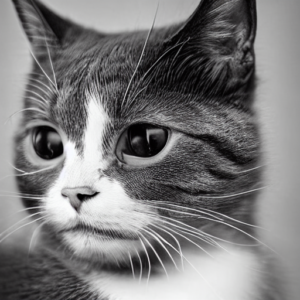
Stable Diffusion on cpu

Example image of cat
CPU Rendered Cat 512×512

AKA “Stable Diffusion without a GPU” 🙂

Currently, the ‘Use CPU if no CUDA device detected’ [1] pull request has not merged. Following the instructions at [2] and jumping down the dependency rabbit hole, I finally have Stable Diffusion running on an old dual XEON server.

[1] https://github.com/CompVis/stable-diffusion/pull/132
[2] https://github.com/CompVis/stable-diffusion/issues/219

Server specs:-
Fujitsu R290 Xeon Workstation
Dual Intel(R) Xeon(R) CPU E5-2670 @ 2.60GHz
96 GB RAM
SSD storage

Sample command line:-

time python3.8 scripts/txt2img.py --prompt "AI image creation using CPU" --plms --ckpt sd-v1-4.ckpt --H 768 --W 512 --skip_grid --n_samples 1 --n_rows 1 --ddim_steps 50

Initial tests show the following:-

ResolutionStepsRAM
(GB)
Time
(minutes)
768 x 51250~1015
1024 x 76850~3024
1280 x 102450~6566
1536 x 128050OOMN/A
Resolution, Peak RAM and Time to Render

Notes:
1) Typically only 18 (out of 32 cores) active regardless of render size.
2) As expected, the calculation is entirely CPU bound.
3) For an unknown reason, even with –n_samples and –n_rows of 1, two images were still created (time halved for single image in above table).

Another CPU Rendered Cat 512×512

Conclusion:

It works. We gain resolution at the huge expense of memory and time.